 Decking Gold Coast Experts
Southport Materials Comparison
Composite vs Timber Decking Southport: Which Is Best For Your Home?
We've been building decks across the Gold Coast for years, and the question we hear almost daily is about which material is better. Both have their fans, and both have their place in Queensland homes.
This article breaks down everything you need to know about composite vs timber decking in Southport. We'll look at what works best in our coastal climate, what fits different budgets, and what matches the outdoor lifestyle Gold Coast homeowners love.
Understanding Decking Materials in Coastal Environments
The Gold Coast isn't just any location – it's a place where your outdoor areas cop a beating from the elements. Salt spray, blazing UV rays, and those sudden summer storms all impact your decking materials differently.
Timber has been the traditional choice for decades. It's natural, beautiful, and has that classic appeal. Hardwoods like Merbau, Blackbutt, and Spotted Gum have proven themselves in Australian conditions.
Composite decking is the newer kid on the block. Made from a mix of recycled plastic and wood fibres, these boards are designed to tackle the problems that plague traditional timber.
When you're choosing materials for your Southport home, you gotta think about:
- Proximity to saltwater
- How much direct sun the area receives
- Whether the deck is covered or exposed
- Your budget for both installation and maintenance
- The overall look you're going for
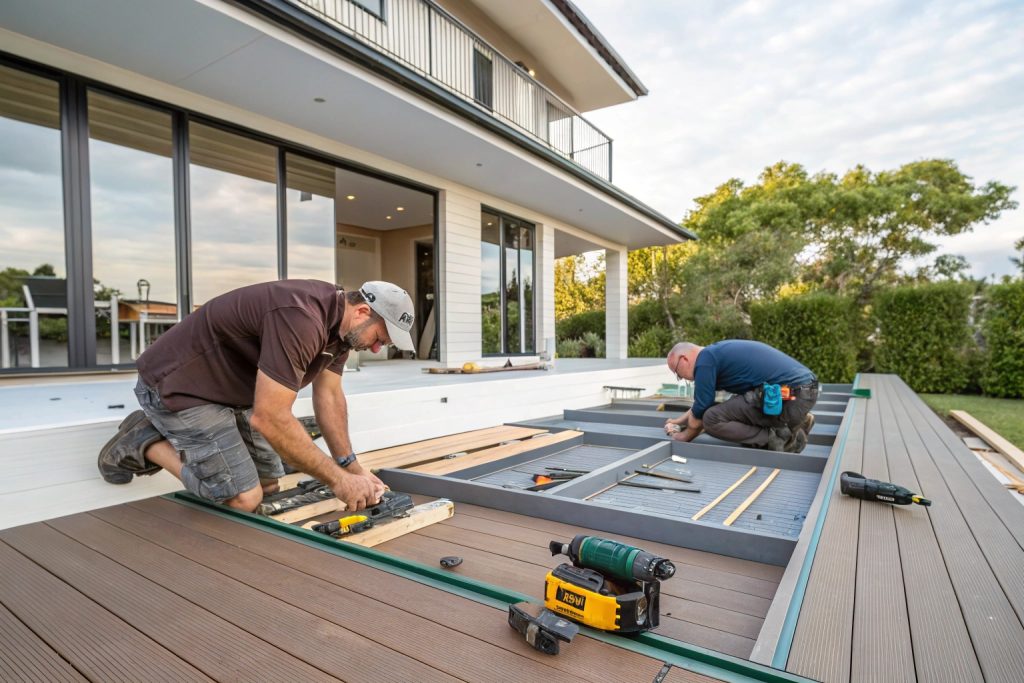
Composite Decking: Pros and Cons for Southport Homes
Composite decking has grown super popular in Gold Coast homes, especially in beachside suburbs like Southport. Let's look at why so many homeowners are choosing it.
The Good Bits
- Low maintenance – This is the big one. You don't need to sand, oil, or stain composite decking. A good wash with soapy water a couple times a year is usually enough.
- Consistent appearance – While timber can develop character (or problems) as it ages, composite stays pretty much the same year after year.
- No splinters – Great for families with kids or if you like walking barefoot, which let's be honest, is practically the Gold Coast uniform.
- Resistant to termites – A huge advantage in Queensland where these little buggers can cause havoc.
- Fade resistant – Quality composites hold their colour even under the intense Southport sun.
- No rotting or warping – The boards won't cup, twist, or develop soft spots like timber can in wet conditions.
The Not-So-Good Bits
- Higher upfront cost – You'll pay more initially for composite boards than for most timber options.
- Can get hot underfoot – Some composite decking can heat up more than timber in direct sunlight. Not ideal when summer temps hit the high 30s.
- Less natural feel – Even the best composite doesn't fully capture the warmth and texture of real timber.
- Colour fading – Some lower quality products can fade over time, though this has improved heaps with newer brands.
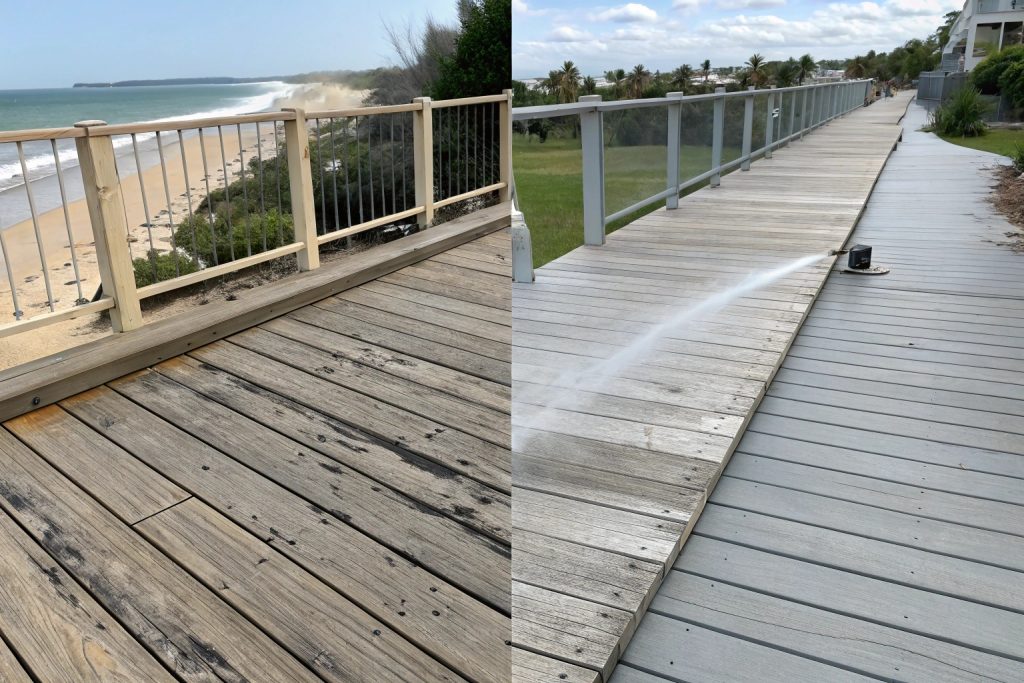
Timber Decking: Traditional Beauty and Maintenance
There's a reason timber has been the go-to for decking in Australia forever. Nothing beats the natural beauty and feel of real wood underfoot.
Why People Love Timber
- Natural beauty – Every board is unique with its own grain pattern and character.
- The feel – Timber doesn't get as hot in the sun as some composite products.
- Value – Generally more affordable upfront than composite alternatives.
- Repairable – You can sand out scratches and damage and refinish the surface.
- Traditional look – Timber complements the classic Queenslander and coastal architecture around Southport perfectly.
The Downsides
- Maintenance requirements – This is the big one. Expect to oil or stain your deck at least annually, more often if it's fully exposed to the elements.
- Susceptible to weather damage – Without proper care, timber will grey, crack, and deteriorate in the harsh Gold Coast climate.
- Termite risk – Even treated timber isn't completely immune to these pests.
- Splinters – As timber ages, splinters can develop that aren't exactly foot-friendly.
- Warping and movement – Timber expands and contracts with moisture and temperature changes, which can lead to warping over time.
Cost Comparison: Long-term Value Analysis
When comparing composite vs timber decking in Southport, you need to look beyond just the initial price tag.
Initial Installation Costs
Timber decking generally ranges from $200+ per square metre installed, depending on the species. Spotted Gum and Blackbutt sit at the higher end, while treated pine is cheaper.
Composite decking typically costs between $350+ per square metre installed. Premium brands with better warranties and performance sit at the top of this range.
Maintenance Costs Over Time
The gap closes significantly when you factor in maintenance, and often composite works out cheaper in the long run, especially in our harsh coastal environment.
Free, No-Obligation Advice
Composite or Timber — Which Is Right for Your Southport Home?
Budget, maintenance appetite, and style all factor in. Our decking specialists can help you weigh it up for your specific property.
Weather Resistance: How Each Material Performs
The Gold Coast throws everything at your deck – blazing sun, driving rain, salt spray, and high humidity. How do our contenders stand up?
Timber Performance
- Sun exposure – Natural timber will silver and fade without regular oiling. Some people love this look, others not so much.
- Rain and moisture – Hardwoods handle this better than softwoods, but all timber is susceptible to moisture issues eventually. Proper drainage and ventilation are critical.
- Salt exposure – Close to the beach? Timber will cop it harder and need more frequent maintenance.
- Humidity – Can cause expansion and contraction cycles that stress the boards over time.
Composite Performance
- Sun exposure – Quality composites are UV-stabilised and hold their colour well, though some fading may occur in the first few months.
- Rain and moisture – This is where composite shines. It doesn't absorb water like timber, so no rotting or warping issues.
- Salt exposure – Generally excellent resistance to salt spray, making it ideal for Southport properties near the water.
- Humidity – Much less affected by humidity changes than timber alternatives.
For beachfront or canal homes in Southport, composite usually outperforms timber in weather resistance by a country mile.
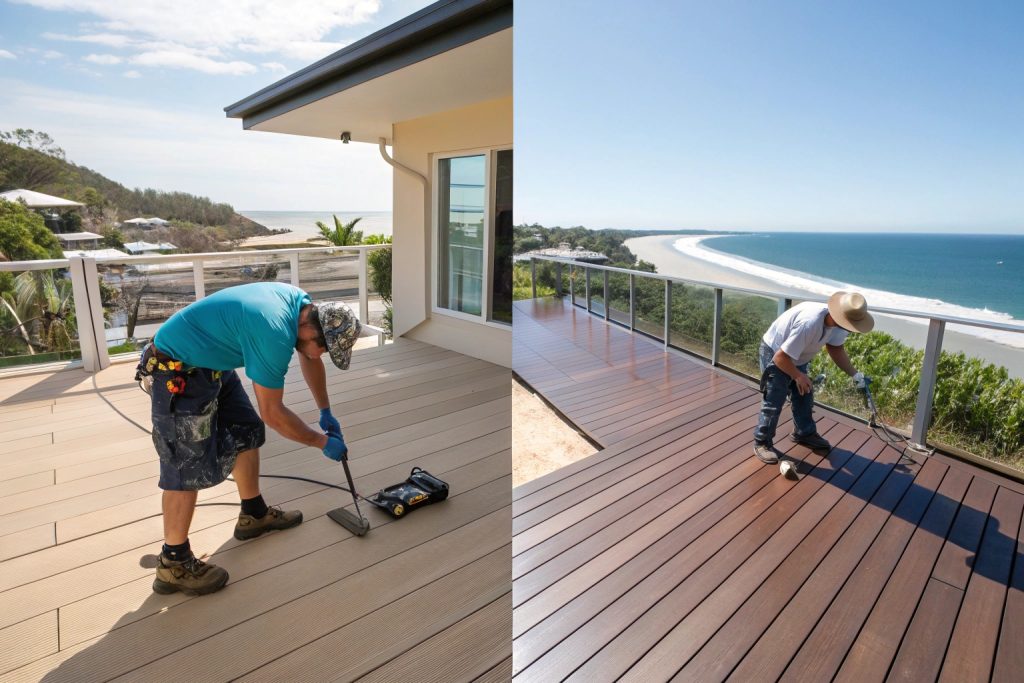
Making the Right Choice for Your Home
So what's the bottom line on composite vs timber decking for your Southport home? It really comes down to your priorities.
If you love real wood's natural look and feel, timber might be your best choice. The authentic warmth and character of natural timber creates a classic appeal that many homeowners in Southport prefer, especially for traditional Queenslander-style homes. Timber often makes more financial sense for those working with a tighter upfront budget. The lower installation costs can be appealing if you're okay with handling the ongoing maintenance requirements of a natural product. Timber is also great if your deck is covered or protected from direct weather. Under patios or roofed areas, timber requires less maintenance and can last much longer without facing the full brunt of Queensland's harsh elements.
On the flip side, composite decking makes perfect sense if low maintenance is a priority for you. For busy professionals or retirees who want to enjoy their outdoor space rather than work on it, the minimal upkeep requirements of composite are incredibly appealing. If you plan to stay in your home long-term, the initial investment in a composite often pays off. While more expensive upfront, the reduced maintenance costs over 10+ years usually result in composite being more economical, especially in our coastal climate. Homes with decks exposed to harsh sun, rain, or salt spray will particularly benefit from composite materials. The durability in challenging conditions means your deck will look great for longer without constant attention, which is particularly important for beachfront or canal properties in Southport.
If you have questions about what would work best for your specific Southport property, give us a call. We've been building timber and composite decks across the Gold Coast for years and can help you weigh up the pros and cons for your situation. Whatever you choose, a well-built deck is an investment in your lifestyle and your property value – and in Southport, outdoor living is what it's all about.
Related Posts
-
Create Stunning Outdoor Spaces with Multi-Tiered Deck Designs
There's something special about a backyard deck that goes beyond a simple flat platform. Multi-level…
-
Single vs Multi-Level Decking: Which Design Suits Your Home Best?
Choosing between a multi-level and single-level deck is one of the biggest decisions homeowners face…
-
Decking Foundation Main Beach Installation: Your Complete Local Guide
When you're planning a deck for your Main Beach property, the foundation isn't just about…
More from the blog: Composite Deck Lifespan Coastal Main Beach Durability: 25+ Years in Salt Air · How Long Does Deck Installation Take in Surfers Paradise? Your Complete Timeline Guide
previous post: Deck Council Approval Burleigh Heads: What You Really Need To Know next post: Weatherproofing Your Timber Deck: Essential Products and Techniques
 CALL US NOW